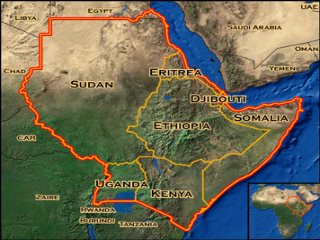
Sunday's terror bombings, which murdered 76 people in Uganda's capital, Kampala, are another signal that East Africa could face a devastating regional war.
The attack demonstrates that Islamist terrorists willing to commit mass murder to advance their criminal theology remain active in eastern Africa. Americans first became aware of al-Qaida following the August 1998 terror bombings of U.S. embassies in Kenya and Tanzania.
Somalia's al-Qaida-affiliated Al Shabab Islamist terror group has claimed credit for the Kampala massacre. One bomb exploded in an Ethiopian cafe filled with World Cup soccer fans. Al Shabab's murderers picked that target carefully. Ethiopia supports Al Shabab's nationalist opponents in Somalia.
Ugandan troops serve with the African Union peacekeeping force in Somalia, which makes Uganda a special target for Al Shabab. Al Shabab's attacks in Kampala may be an attempt to repeat al-Qaida's "Madrid Precedent." Recall al-Qaida launched attacks in Madrid in March 2004, just before Spain's national elections. A "pro-peace" government was elected, and it withdrew Spanish forces serving in Iraq. Uganda has national elections scheduled for early next year.
A more dangerous regional war, however, lurks in East Africa. Uganda borders on south Sudan. Every day relations between the semi-autonomous Government of South Sudan (GOSS) and Sudan's national (northern) government in Khartoum deteriorate. The 2005 Comprehensive Peace Agreement (CPA), which ended the last north-south war, the Second Sudan Civil War, stipulated that a plebiscite on southern independence be held in 2011. Many southerners believe South Sudan is already a separate country. They support independence -- except the national government calls it "secession."
Conditions exist for renewed civil war, and a nudge or two, a bomb here and assassination there, might ensure it. Al Shabab has studied the map. Should the Third Sudan Civil War erupt, Ethiopia would face war on a third front. Ethiopia already confronts Eritrea and Somalia. Radical Islamists would exploit the religious facets of renewed civil war: South Sudan is predominantly Christian and animist, and the north is predominantly Muslim.
The Second Sudan Civil War lasted two decades, left 2 million dead, created millions of refugees and -- despite ritual denials by Khartoum's Islamists -- involved slaving by northern-backed "Arab" militias. Southern Christian and animist black tribespeople were kidnapped then sold. Uganda was a covert ally of the southerners, for many reasons, including close links with the Dinka tribe, which provided the leaders in the south's Sudan Peoples Liberation Army (SPLA). Arab slaving, however, played a role.
Tribal violence already afflicts southern Sudan. Estimates vary (the areas involved are isolated), but a thousand people died in 2009 in tribal violence in South Sudan. The GOSS claims the north incites violence by providing arms to troublemakers. Sudan's national president, Omar al-Bashir, is under indictment by the International Criminal Court for genocide in Darfur. Providing arms to willing killers is a proven Bashir policy.
Oil fuels North-South disputes, and in a new civil war oil fields will be battlefields. Roughly 75 percent of Sudan's oil reserves are in territory that GOSS claims. "Claims" is appropriate because the exact north-south border has not been finalized. The two governments argue over oil income. South Sudan relies on oil royalties for 95 percent of its budget. The north dispenses the revenues. The GOSS contends the north cheated it of $300 million it was due in 2009.
Uganda insists Khartoum still supports Uganda's Lord's Resistance Army rebel group, so a new war could bring in Uganda as a military ally of the south. Kenya, and conceivably Ethiopia, might also be openly involved. Kenya has been a conduit for arms to the SPLA. In 2008, Somali pirates hijacked a ship transporting Ukrainian tanks to Kenya. The tanks' destination was South Sudan.
A vital environmental and economic conflict further exacerbates tensions. Kenya, Rwanda, Uganda, Tanzania and Ethiopia have announced they will no longer abide by a 1929 colonial treaty that gives the downriver nations what they regard as an unjust share of Nile water. The Khartoum government and Egypt reject the upriver nations' contentions.
Oil revenue and water rights disputes, religious differences, ethnic struggles and terrorists exploiting every division -- East Africa's fragile states edge toward a war of the poor that will create greater poverty.


Comments
and hard to belive a simple 24 hour Chat eater Somalian pirats or socalled Al-Shabab member can
hyjack the most sophisticated Europians big ships by simple gun,or make a well organize bombing
to kill poor people by own mind ,conscious and ablity unless these groups are not be driven,guided
or motivared by remot control to do the job by others big head political Architects who created
them. Isayas´s staborn Pharaho roll and Melese´s obident roll like Moses is also their formation
and busness is also not different like those Pirats and Al Sababs. The pirats they do the job for
the sake of money, Esayas and meles for the sake of staying in power.
Mr. Tesfa Michael if you don't mind, politicaly, the purpose of hitting at innocent civilians is intended to discredit the Ugandian Government. They [Al-Shebab] want the citizens to believe that the state cannot protect them.They want to show the looming threat to the country, especially at a time when the country is preparing to host the African Union summit from July 19 to 27.
The Ethiopian restaurant was likely targeted because of "Ethiopia's involvement in Somalia". That is also a warning message to the Woyane regime afar; an indication of we are coming near kind. Period
If Issaias is ignorant about international relations and is inviting problems to his disfavor, so what is your concern? Don't you want Issaias be destroyed? You insult him and seem to be thinking more for him than he does for himself. Or are you expecting him to follow exactly as tell him? What are you trying to tell him, anyway?
Mubarek and Melless are largely dependent on U.S. aid, in many aspects. Both are more closer to the U.S. than to ER, and we know that. Al Shabab exists and operates independent of ER. There is nothing much that ER can do to influence them. An Al Shabab leader has vowed to attack Asmara when they see it fit, as they did in Kampala. Why relate the Kampala bombings to ET-ER disagreements? Nile waters were used based on international agreements. The water is God's gift, not anyone country's. PIA said that all countries need to study to use the Nile for the benefit of all, and that unilateral actions against existing international agreements create tension. He didn't say ER would help Egypt destroy ET. I think that is your idea. ET would not go to the extent of blocking the Nile waters and endanger normal life in Egypt and Sudan. ET's hydroelectric power wouldn't reduce water flow into the Nile. Your comments.
Repeating the same mistake will not only fail to defeat Al-sheba, but will likely empower it further. So let people of Somalia decide how they want to be governed and by whom.in order to encourage the responsible governance.
1. Invading Djibouti and then begging the Arabs to mediate him when his neck was left under the dangling sword of a sanction; ... b
3. Supporting the most evil Jihadist terrorist Islamists of al shabaab in this planet who would not even allow their own compatriots to watch a football game on tv. How can one support or associate the name Eritrea with such barbaric animals that just slaughtered innocent Ugandans, Ethiopian, Eritreans ... in Kampala? ... c
I tell you an octopus from the Red Sea or the humble domestic animal adgi-Zagr would make better decisions than Isaias-Afaf ...
If Isaias-Afaf continues to make the same military and diplomatic decisions that threaten the interests of Ethiopia and other Horn regions, in particular Tigrai, the Woyanies have every right to invade and overthrow Isaias-Afaf and hgdef. With all these bad records stuck against Isaias-Afaf, the UN, African Union, IGAD and the super powers will support Meles in full force.
Monday, 05 July 2010 14:31
ዋዕላ ብሄራት ኤርትራ “ብሄራዊ መልክዕ ውዳቤና ዋሕስ መሰልናን ህላዌናን” ኣብ ትሕቲ ዝብል መሪሕ ጭርሖን ቴማን ኣብ ርእሰ ከተማ ብሄራዊ ክልላዊ ምምሕዳር ትግራይ መቐለ ብዕለት 28/06/2009 ብድሙቕ ኩነታት ተጀሚሩ፡፡ ኣብዚ ዋዕላ ሓሙሽተ ናይ ብሄር ውድባት፣ ሰለስተ ሕብረ ብሄራዊ ውድባት፣ ወከልቲ ብሄራውያን ሲቪካዊ ማሕበራት፣ መራሕቲ ሃይማኖት (ክርስትና፣ ምስልምና፣ ባህላዊ እምነት) ደቂ ኣንስቲዮ፣ መንእሰያት፣ ሽማግለ ዓዲ ጋዜጠኛታትን ዑዱማት ኣጋይሽን ተረኺቦም፡፡
( source messel bherat)
Asmarino would you please post the whole article , as you did with articles on the conference to be held in Addis ?
It is becoming more clear now, that Eritreans are divided in to groups of : 1. Sovereignists 2. Ethnic/ Religious Based Federalists 3. Soft- Nationalists 4. Silent- Majority. Thanks.
1. Get ride of Issayas and then al shebab will die like denying water to a young plant during the dry season. Al shebab will die with out any bullet to fire.
2. If Al shebab still active after Issayas is gone then Ethiopia should recognize the two runway northern Somalia of Somaliland and Pantland as independent countries and let Kenya incorporate the deep south of Kisumayu of current Somalia and the central Somalia should be incorporated with Somali Ethiopia as part of Ethiopia and the whole Al shebab love affairs will be gone forever. Ethiopia should send massive forces to stabilize the situations coordinated by Somali Ethiopians. But Ethiopia has to get rid of Issayas first.
Unfortunately, the poor people of Eritrea will suffer during that process because removing mad dog like Issayas will not go quitely....more blood will be spelt.
A Horn of African solution.
In 1956 Israel convinced the U.S. that it would be good for U.S. (globally, the Horn and West Asia) to form an alliance against pro-USSR Arabs.Members were Turkey, Iran, and Etyoppiya with Israel tying them with the U.S. That was called the Peripheral Strategy, encircling the Arab states. To this was added the liberation strategy of Greater Somalia in 1960. Now the U.S. has modified its strategy into working through anchor countries dominating their immediate regions(e.g. ET in the Horn) and Somalia is under anarchy. So, opinion shapers like Amb. D. Shinn, Mr. P. Henze and Prof. K. Mankhaus advocate for U.S. regional policies, and reporters like Getlman, Bay, etc. highlight news/analysis supporting the 1956 strategy. The U.S., Israeli, and ET 1956 alliance that works against peace in NE Africa was/is the prelude to the many conflicts in the region. The Kampala bombings are just first act for Al Shabab outside Somalia.
RSS feed for comments to this post.