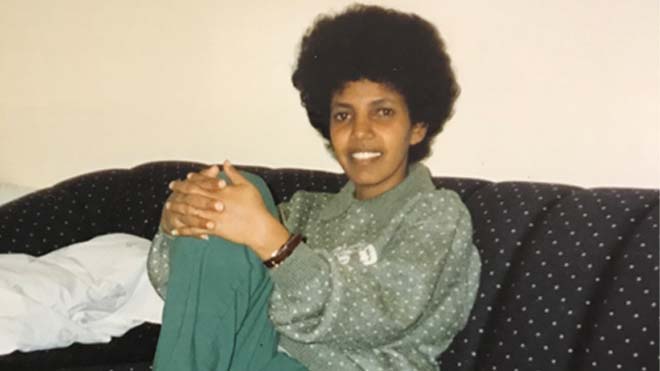
It is an established fact that women displaced by armed conflict – often living alone with their children – are frequently exposed to sexual violence, discrimination and intimidation. Many face poverty and social exclusion as well. International humanitarian law therefore includes specific provisions protecting women, for example when they are pregnant or as mothers of young children. Since Eritrea, however, is a law unto itself, and the ‘armed conflict’ has been over for decades, it is the phony ‘threat’ from Ethiopia used as a justification for national conscription which produces the same ill effects on Eritrean women. Women are forced into national service, where they are treated as subhuman, or are separated from their menfolk on the outside with no provision made for the most basic survival needs for themselves or their children.
Read more...
There is already a general consensus among Eritreans that the civic and political opposition should be working closely with the UN Security Council and all other players making sure the sanctions are comprehensive enough to include foreign trade and mining investments. Others are calling for the immediate and full implementation of the arms embargo, account freezes and travel bans on Eritrean leaders; some governments have already taken such action.
Other Eritreans also see the need to end PFDJ’s fundraising activities in foreign countries unless there are transparent guarantees that the money will go directly to Eritreans who need it most. Finally, there are those who think there should be a task force of experts to take on the possible questions of war crimes and crimes against humanity committed by the regime inside Eritrea and beyond its borders.
Read more...

Sentiments are the basic threads of the national fabric by which the Eritrean blanket has been interlaced. So much selective memory has pinned down the Eritrean identity to a map of a nation state that is almost of no significance in the global climate other than its troublesome influence in its local setting which, by the way, works against its own survival.
Who would want to adopt or hype up those types of layers of identities, memories and sentiments... and for a map that wasn’t there in the first place and was always changing due to forces beyond its control?
Probably those who are incapable of handling their past or adapt to a fast changing future... or still, those who are crafty enough to use the map of Eritrea as a ground force to gravitate its importance as a cover up for their own personal benefit?
Most Eritreans have been reduced to taking care of themselves or their families. Preserving their nation state ranks last. The nation state is on free fall.
So much for nationalism!
Read more...
"We are number one in this continent". This is the type of Idi Amin buffoonery that continues to haunt Africa. Unelected and unaccountable “leaders” stripping the dignity of their people willy-nilly, delivering nothing but empty slogans. Like the tigrigna saying "kebtimo wesidomen, ente xerfi gn zgedfanlom yeblanan". Isaias boastfully claims there is no food shortage in Eritrea and we know better. Isn’t that the sort of callous denial -- the refusal to feel the pain of his people – that eventually brought Haile Selassie down?
Even the most rabid diaspora supporters of the regime are not fooled by this “number one” bull, however. They may wrap themselves in the flag for the "show", curse the very freedoms they enjoy daily, and ungratefully slap the generous hand that feeds them. But they are staying put in their safe havens. They are not moving. What, no one wants to live in the number one country in Africa? Obviously, something must be wrong with that picture.
Read more...
In May 2008, Djibouti referred the situation in Ras Doumeira, on its border with Eritrea, to the Security Council and various regional organizations (the AU, the Arab League), denouncing the strengthening of Eritrea’s military capacities and the occupation of territories belonging to Djibouti. The two countries have a longstanding border dispute in the region, where the border—established by agreements signed by France and Italy in 1900 and 1901—has never been delineated.
The Djiboutian and Eritrean armies had been engaged in a showdown for two months when, on June 10, 2008, violent fighting sparked by an Eritrean attack led to the death of several dozen soldiers from both countries. On June 12, the Security Council presidency—held by the United States at the time—condemned the “military action” conducted by Eritrea and called on both parties to withdraw their forces to the status quo ante and work cooperatively to resolve the dispute by diplomatic means. On June 24, the Security Council reiterated its call for restraint and dialogue in a statement to the press issued by the body’s president, who also asked the secretary-general to send a fact-finding mission to the region.
Read more...