


![[AIM] Asmarino Independent Media](/images/logo/ailogo.png)
Eritrea’s Masses: Armed But Docile
Eritrea’s Masses: Armed But Docile
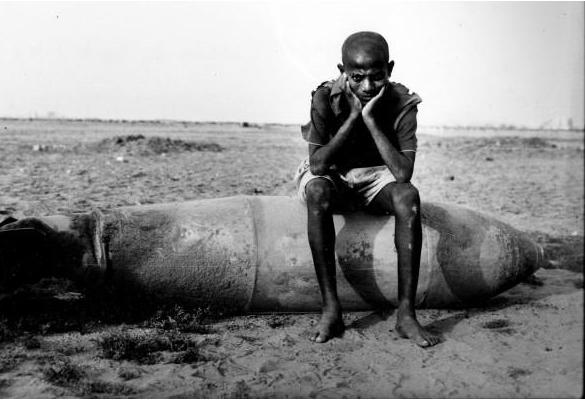
Tyrant regimes throughout history kept their public mute and obedient, largely with the means of inordinate force and with the help of decrees that forbade access to any weapons that may threaten the status quo. For example, Japan though a democracy has now laws that forbid the possession of swords and guns, which has its roots from the Tokugawa Dynasty. The policy of the contemporary regime in Eritrea, however, seems to defy this principle. It has a massive army in the size of a few hundreds of thousands, but has been exceptionally immune from coups that regularly occur in Africa and other places. The military institution does not seem to be a cause of concern to it.
Lately, it has forcefully started arming people in mass without even bothering about their completion of the National Service, or their prior exemption under the slogan of hzbi ynqah, ywedeb, yte’ateq. [1] Yet again, the public is not considered a threat. The Arab Spring or Arab Awakening that toppled several regimes in the Arab world, and still unraveling Syria, does not seem to trouble it. Incredible as it may look, many people in the Eritrean opposition are still expecting the same scenario.
The Arab Street initially started with peaceful marches; it was later joined by rock-throwing and tire-burning mobs. This method was so effective that the Tunisian regime unraveled itself rapidly. The Egyptians took the cue, and dealt their modern pharaohs with the same blow. Libya followed a violent path becoming the model for ongoing rebellion in Syria now.
In the meantime, there is no trace of any Asmera Street in Eritrea. Some politicians from the Eritrean diaspora fervently waited for it to materialize without luck. The public, which is composed, now of mainly children and old people in Asmera and most towns in Eritrea has no appetite for a confrontation, peaceful or otherwise. The masses are far from it.
The regime confident of its security, and in contempt of the masses (the masses that are always praised in the media), has recently started arming people from all walks-of- life including people who are seniors. We do not know the exact rationale behind this seemingly reckless and indiscriminate policy. A few have ventured to say that it was a panic-reaction from Ethiopia’s well publicized military action, which happened a few months ago.
The reaction to the indiscriminate arming of the public among some writers in the cyber world is noteworthy. While the author of the Tom and Jerry columnist at Asmarino.com wished the armed folks would rise in revolt in their villages, Berqi lamented the abuse from the regime, which did not spare even his few friends who gossiped about the regime with him in the bars of Asmera on the same subject. The latter seems to be closer to the feelings of the lament of the hafash, who now find themselves completely pooped.
The “valiant masses” have turned wimp in Eritrea these days. The hafash that allegedly fought with valor, bravery, and Against All Odds now find themselves completely in a state of paralysis. They do not know what to do with the guns given to them from the rapacious government. They reportedly whimper, “What are we to do with it? Does the government want us to murder each other? Etc. [2] The public’s worry so far is the unregulated nature of the arms distribution, and not the violence of the state.
They sound like the citizens of the United States opposed to gun ownership. They seem to have resigned themselves to the monopoly of violence to one of the most tyrannical regimes in the world. Clearly, revolution is not in their mind. Captured captive by the yeakealos since many years, hungry, their energies sapped and their moral fabric in tatters, they seem no different from their ancestors who faced the might of the white man a century ago.
Unable to mobilize themselves around their old tribes and villages, and denied any non-state space to vent their feelings, they endure the repression in complete submission. In comparison to their behavior, the people of Yemen (tribes, the civil society, and some sectors of the army) fought stubbornly against the late military regime. What explains this response?
Yemen and Eritrea share many similarities in culture and geography. If the people in their coastal areas are influenced by the hot, humid and inhospitable climate, their mountains have equally nurtured conservative peasants who rally around their tribes in both times of peace and adversity. Since the distant past, aided with their inaccessible mountains and armed with swords and daggers, these mountain folks had maintained some autonomy from various empires. They did not have the right to bear arms as enshrined in the U.S. Constitution; nonetheless, it was a tradition they cherished for centuries. Gun ownership was valued as an equalizer with all its flaws in both nations. This traditional culture has remained to this day in Yemen, but the peasants of Eritrea have, unfortunate to them, surrendered it to the state. What historical forces put an end to it?
As frontiersmen, the people in the northern highlands that later became Eritrea rarely left their villages without either spears, swords or guns; for the state of anarchy and the proliferation of arms since the decline of the Solomonic rulers from Gonder had been well in progress. The political void resulted in the emergence of several warlords competing for power and resources. Peasants had no choice. They had either to join their lords or switch their allegiance to those who became powerful. Horrible as the times and crude as the weapons were, some of the peasants had nevertheless gun ownership customs. External intervention from Egypt, and particularly imperial Italy, made a quick end to it.
Colonial Italy, disappointed with the lack of resources in the region, decided instead to use the war ethos of the people to execute its expansionist wars in places such as Libya, Ethiopia and Somalia. Tens of thousands were recruited for this purpose. Unlike the British in Yemen, who practiced colonialism through the indigenous chiefs, the reach of the Italian administration in Eritrea was relatively wide and deep. Equipped and fed by them, the former peasant warriors lost their independence altogether.
This state of affairs lasted until the defeat of the Italians during the Second World War. The interlude before the advent of the nationalist war did not invoke their old rights to carry arms. Instead, it dragged them into a long and brutal war with Ethiopia in a more systematic and thorough way that can only be described as a “total” war. Peasants, and specifically the ones from Kebessa highlands, were not only drafted into the armies of the fronts, but also their drought animals, crops and houses. The burden of the extractive regime of the fronts lasted until the end of the Ethiopian rule, and thereafter.
Once in power, the regime led by the front had a second thought about the armed militia that served it in its war with Ethiopia, and disarmed the large majority of them. The fact that they were not individual fighters but its militia did not bother it. Parallel to this event was the sudden demobilization of tegadelti (fighters) following a mutiny that occurred a few days before the Referendum Day. The fear from the disaffected tegadelti population explains the abnormal response of the military rulers.
Throughout the rest of the following years, however, the front’s authorities have been in the habit of drafting the large majority of the working age population in perpetuity. Now, there is no trace of the “fearsome” looking peasant warriors that often posed for photographers in the nineteenth century. While their counterparts in Yemen are still formidable, feared and uncaptured, the Eritrean peasant is only left with his ubiquitous stick. His last weapon of defense has now diminished to a small and thin size. In other words, the peasant is now only a caricature of the nineteenth century peasant of the frontiers. This grim political landscape is the aftereffect of the historical experience that began with colonial Italy and ended with the “liberators”. Thus, the pathetic situation of the Eritrean peasants was, among many factors, the result of the secretive, terrorist organization in the hands of its own children that even surpassed the ones practiced in the past.
While abolishing all other traditional forms of identity and mobilization, it coerced the public to join various mass organizations. This made the populace easy to control more than any time in the past. [Tragically, this organizing capacity made the EPLF admired and famous among some non-governmental organizations, writers and historians on Africa.] The society lost its advantage in being opaque and complex, as opposed to being so easily legible, more than many communities in Africa. The odds stacked against the populace had never been this big.
The fact of its being armed, while being completely legible, does not empower the society at all. Scott defines “legibility,” as “a state’s attempt to make society legible, to arrange the population in ways that simplifies the classic state of functions of taxation, conscription, and prevention of rebellion.” [3] Concurrently, the fact of being in the diaspora has not deterred the regime from exacting silence, political support and tax from the multitude of people who fled the country, for its capacity of seeing [4] is also trans-national.
Hence, the likelihood of an Asmera street civil disobedience or an insurgency without a force from outside Eritrea will more likely remain a chimera. Carrying guns alone, without the public space for organization, will not empower people. The lasting impact of the terror experienced by the populace in the hands of the “liberators” ensured their complete emasculation even after the country appeared in the globalized world. The lesson from the colonial past is still very profound. After the defeat and terror in the hands of the Italians, the Eritrean peasant was transformed into a model mercenary army. Italy’s empire in Eritrea ended only with British Empire’s might.
In the same vein, the Eritrean peasant will only rise up, if there is a likelihood of a force from without wishing to topple the regime. The regime of what the public calls deqena (our children, in Tigrigna) is as debilitating as the polio to children because of the its effective and enduring use of hzbi ynqah, ywedeb, and yte’ateq. The Tigrigna word ynqah is a borrowed leftist terminology for political indoctrination, while ywedeb is another term for regimentation. In order for the armed but automaton-like subjects to regain their sovereignty, an intervention force may play as the catalyst.
The chaos resulting from an intervention force will be instrumental in triggering the complete opaqueness of the populace. If this happens, the masses in Eritrea who are now as the deer in the headlight will certainly see lucidly, shed their docile nature and know who to point the guns in their possession. For instance, Pol Pot’s Cambodia would have lasted longer had it not been dealt a heavy blow by the Vietnamese in the late 70s. The Khmer Rouge’s organization, Angka, that reputedly had as many eyes as the pineapple could not stop the dispersal of the people in every direction.
The public’s chance for other salvation is dim. Berqi’s recent heart wrenching cry for individual action is futile. Self-immolation only works when there is a journalist or a photographer to capture the harrowing image. In Eritrea, there is neither domestic press nor any trace of foreign media. The Vietnamese Buddhist monks’ successful use of this tactic in the late 60s worked in the then South Vietnam because there were Western newspapermen in close proximity to the venue.
Self-immolation also works only in a society with some type of normalcy; in Eritrea, however, death and mass suffering have become cheap and mundane. Self-immolation or any other individual resistance has little impact in a society that lives in a mass trauma. Consequently, Berqi’s Bouazzizi-like character does not exist in Eritrea even among some of those vendors in Eritrea nowadays, who make their living selling kerosene in plastic jugs.
References
[1] Berqi from Asmera. “In Search of the Eritrean Bouazizi”. Asmarino.com.
[2] Asena.com
[3] Berqi from Asmera. “In Search of the Eritrean Bouazizi”, Asmarino.com.
[4] Scott, J, Seeing Like a State (New Haven and London: Yale University Press, 1998), p.2.
{jcomments off}